Season by Season
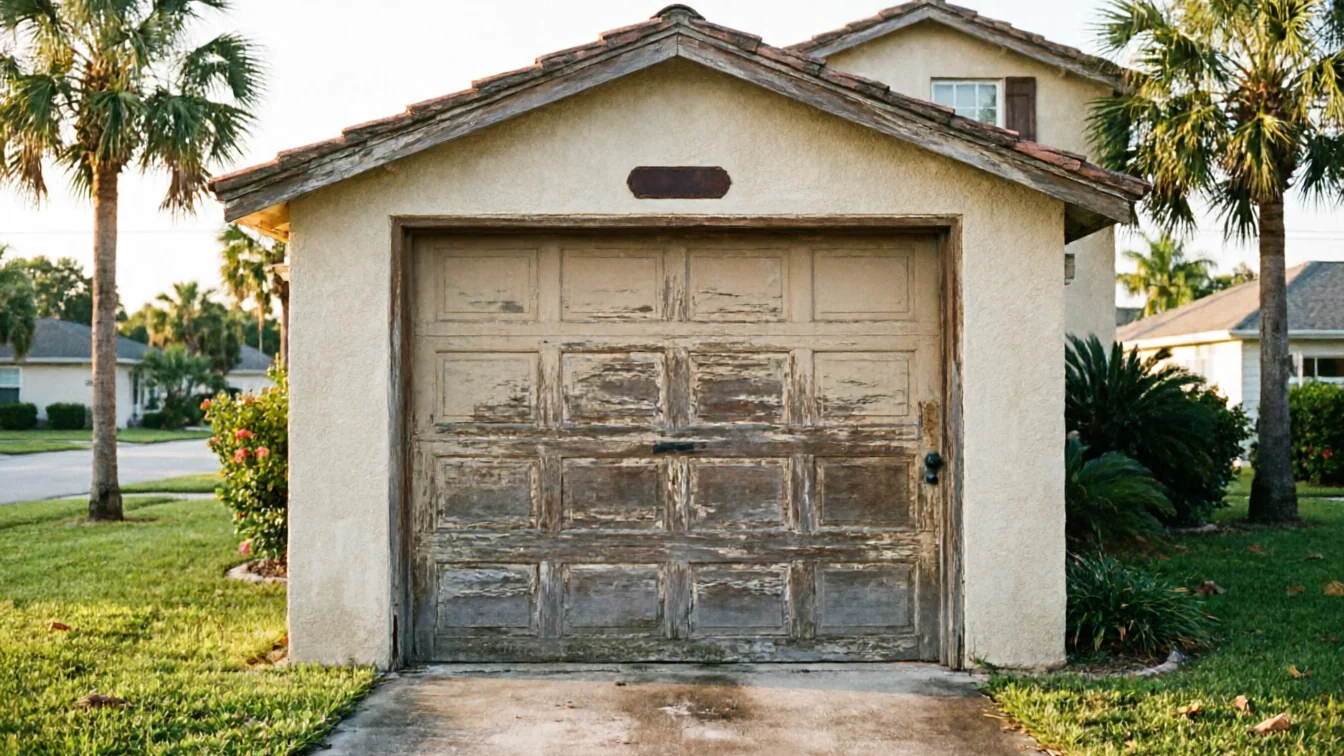
Stuart doesn't get the hard freeze-thaw cycle that chews up hardware up north, and that matters here because so much of the housing stock is old enough to have outlived its first set of springs and rollers. With a median build year around 1983, a lot of doors in North River Shores, Sewall's Point, and Jensen Beach are on their second or third opener motor, if they've been replaced at all. In a mild temperate climate, the wear pattern isn't about ice jamming a track - it's about humidity working on unsealed steel over four decades. Spring and fall are when we see the jump in calls, not because of weather shock but because that's when people finally notice the door they've been living with all year has started grinding. There's no hard freeze to force a seasonal check, so a lot of owners just don't do one, and the door tells on itself eventually - usually with a spring that lets go without warning.
What Local Conditions Do
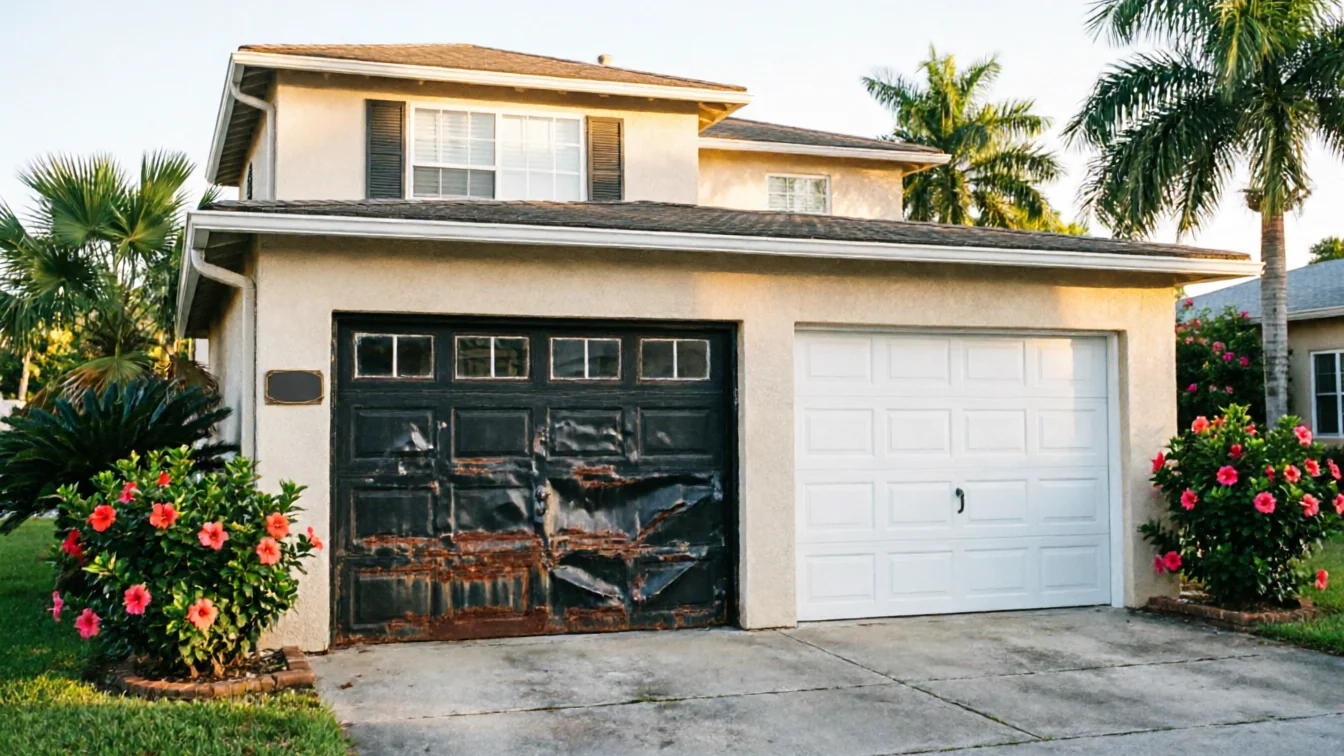
A mild temperate climate sounds like it should be easy on hardware, and in a lot of ways it is - no snow load on the door, no subzero metal contraction snapping cables. But the steady humidity common to this part of Florida does its own slow damage: galvanized coatings pit over the years, lubricant gums up faster than the label promises, and steel tracks that were installed in the 1970s or 80s start showing surface rust at the mounting brackets before anything else fails. Houses built in that 1969-1988 window, which describes most of the service area, were built to standards and materials from that era - lighter-gauge track, single-wall doors in a lot of cases, openers without today's safety sensors. None of that is a defect. It's just what was standard then. The honest limitation here: if your opener is original to a house built in the early 1980s, we're not going to pretend a tune-up extends its life much further. At some point a 40-year-old motor is a replacement job, not a repair job.
What Is Going On
If your door is sluggish, noisy, or off-track, the cause usually traces back to age rather than any one bad day. Houses across the twelve areas we see most - from Port Salerno to River Park, Hobe Sound to Indiantown - mostly went up in the 1980s and 90s, per F2, and that means a lot of original torsion springs still doing a job they were only rated for roughly 10,000 cycles. Do the math on a door opened twice a day for forty years and you're well past that number. Cables fraying at the drum, rollers worn oval instead of round, a track bowed from a gentle but persistent misalignment nobody noticed - these are symptoms of time, not negligence. We don't see much storm-impact damage driving calls in this area; it's closer to steady mechanical fatigue.
Checking It Yourself
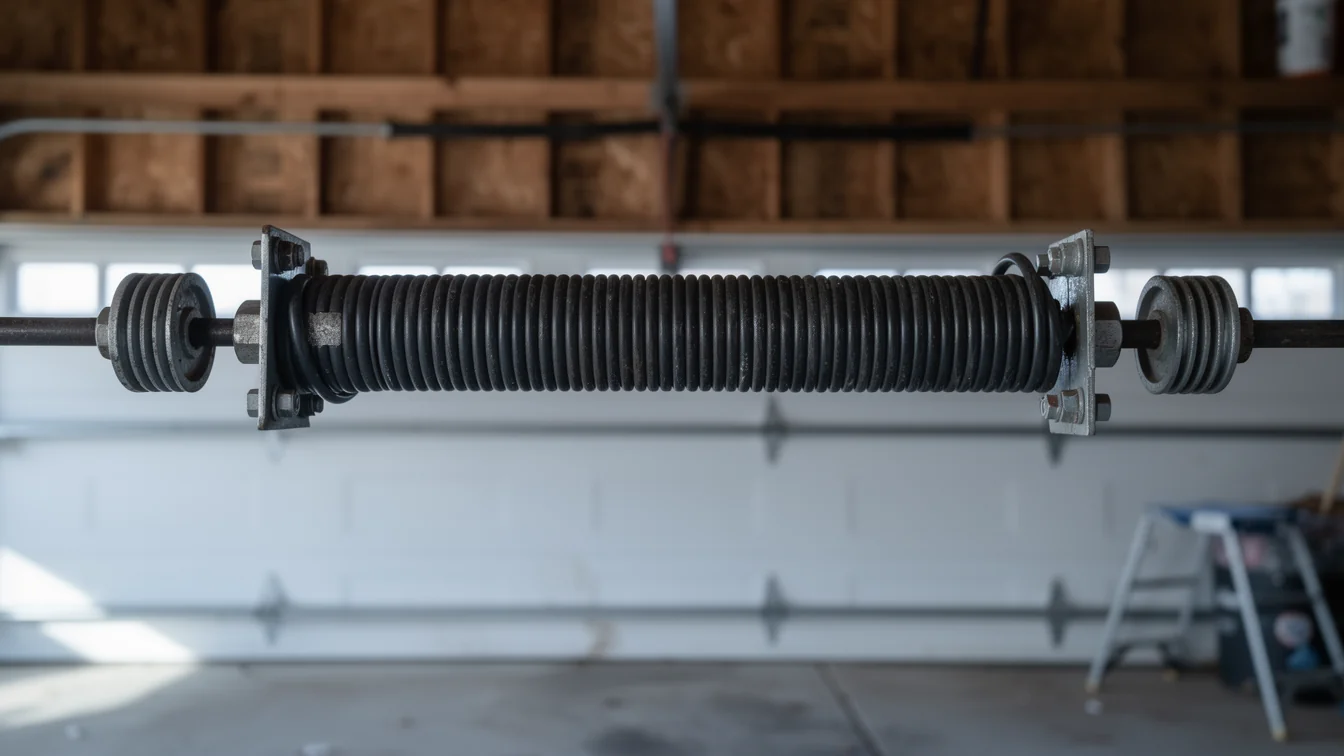
Stand inside the garage with the door closed and look at the spring above the door. If it's one spring stretched across the center, that's original 1970s-80s era hardware in a lot of these homes, and those tend to fail without any warning sound. Pull the manual release cord with the door closed and lift it by hand - it should move with one hand's effort. If it fights you, the spring is already carrying less than it should. Check the track brackets for rust bleeding through the galvanized coating; on houses from the 1969-1988 build window that's the first place it shows. Listen for grinding during a normal open-close cycle, which usually means a roller has worn past its bearing. None of this requires tools, just five minutes before you decide whether a call is worth making.
Talk to a local pro
Garage door trouble in Stuart?
Same-day service with honest, upfront quotes.