Season by Season
Stuart sits in a mild temperate band, so you're spared the hard freeze-thaw swings that crack opener housings and seize chain drives up north. That's the good news. The less obvious news is that mild, humid air doesn't take a break - it works on exposed steel parts all twelve months instead of in one brutal spring thaw. There's no single season here where openers fail in a predictable wave the way they do in colder climates. Instead you get a slow, steady drift: a chain that's a little looser every month, a logic board that's been sitting in humidity since the house was built. Across the 12 named areas that make up this stretch of the Treasure Coast - from North River Shores three miles out to Indiantown eighteen miles inland - the pattern holds the same way. Nobody's opener here dies in a January cold snap. It dies on an ordinary Tuesday, usually right when a power cut hits and the backup battery that was never installed doesn't kick in. That's the actual seasonal story: not weather extremes, but steady wear plus zero redundancy.
What Local Conditions Do
Most houses across Stuart's older neighborhoods went up between 1969 and 1988, with the median landing around 1983. That matters more than the weather does. An opener installed when a house was built in that window predates battery backup as a standard feature, predates rolling-code remotes, and in plenty of cases has just been running on the original logic board since Reagan was in office. Mild temperate conditions mean that board hasn't been stressed by extreme heat or cold cycling - which is probably the only reason some of these units are still alive at all. What they haven't been protected from is humidity. Chain and screw-drive openers in this climate pick up surface rust on exposed hardware faster than you'd expect, and the gears inside a worn unit start skipping teeth quietly, long before the motor actually quits. If your opener was original to a house built in the 1970s or 80s, the question isn't really whether it will eventually fail - it's whether you want to find out during a power cut, with the car trapped inside, or on a slow Saturday when you can deal with it on your schedule.
What Is Going On
When the power goes out, a garage door opener without a battery backup does exactly one thing: nothing. The motor has no power, the door stays wherever it was when the lights went out, and if that happens to be down, your car is on the wrong side of it. Given how much of this area's opener stock dates to the 1969-1988 build window, a real share of these units were installed well before battery backup existed as an option, let alone a default. That's not a defect - it's just the era the house was built in. The honest limitation here: we don't stock battery-backup modules for every opener brand on the truck, and matching an obsolete chain-drive unit to a compatible backup sometimes means a short wait on the part. If your opener is old enough that the model plate is hard to read, it's often simpler and not much more expensive to replace the whole unit with something that has backup built in, rather than chase parts for a motor from 1984.
Checking It Yourself
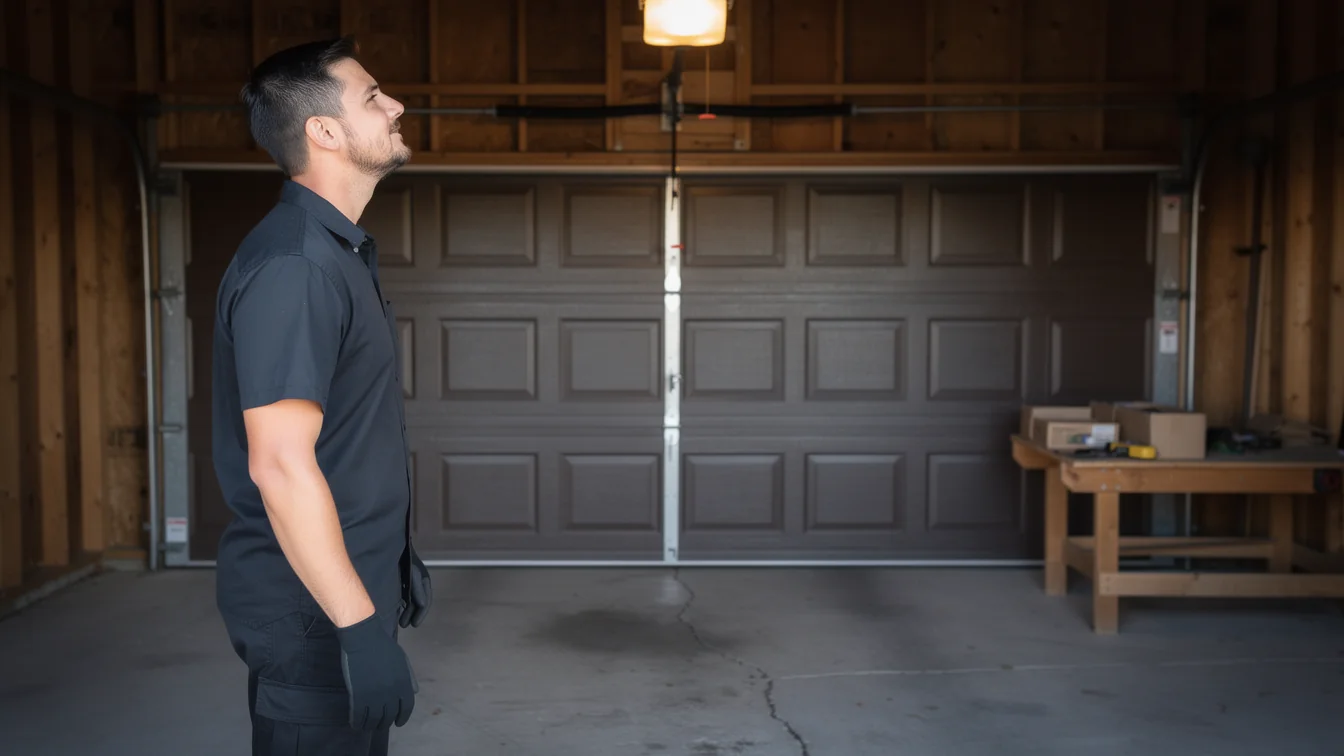
Before you call anyone, find the manual release - the red cord hanging near the opener trolley. Pulling it disconnects the door from the motor so you can lift it by hand during a power cut. Every opener has one; most homeowners have never touched theirs. Test it now, not during an outage, so you know it actually moves freely and isn't painted shut or rusted from years of humid Stuart air sitting on it unused. Next, check whether your unit has a battery backup box - a smaller plastic case near the main opener head, usually with a test button. If you don't see one, your opener runs on wall power only. Listen to the motor on a normal day too: grinding, hesitation, or a chain that looks slack by more than a knuckle's width are signs of wear that a power cut will only expose at the worst moment. None of this fixes a failing unit, but it tells you whether you're dealing with an inconvenience or a unit that's close to done.
Talk to a local pro
Garage door trouble in Stuart?
Same-day service with honest, upfront quotes.