Season by Season
Stuart doesn't have a winter in the way a lot of the country means it. The climate here sits in the mild temperate band, so your garage door spring isn't fighting ice most of the year. It spends its life in heat and humidity instead, which is its own kind of wear - steel coils flex all day in a hot garage, cool off at night, and do it again tomorrow.
The trouble shows up on the handful of days a year when a cold front actually pushes through and knocks the temperature down into the 40s overnight. That's not extreme cold by any national standard, but it's a sudden change for a spring that's spent the rest of the year at a steady, high baseline. Metal contracts a little when it's cold. A spring with plenty of life left shrugs that off. A spring that's already fatigued from years of heat-cycling doesn't always get that chance - the cold front is just the moment it finally lets go, not the cause by itself.
So the pattern we see isn't really about winter. It's about which springs were already close to done when a cold morning happened to be the day someone used the door.
What Local Conditions Do
Housing across this service area - North River Shores, Sewall's Point, Jensen Beach, Port Salerno, and the rest of the twelve named areas out to Indiantown - mostly went up between 1969 and 1988, with a median build year of 1983. A spring installed when one of these houses was built, and never swapped, is now pushing forty years old.
Forty years in a mild, humid climate is different wear than forty years somewhere with hard freezes, but it's still forty years. Humidity works on the coil's finish slowly, torsion springs lose a measurable amount of tension every year just from cycling, and nobody schedules a spring replacement the way they schedule an AC service. The spring just keeps working until one ordinary day it doesn't.
What a cold front does, on top of all that, is add one more stress to a part that's already running on reduced tension. It doesn't take a hard freeze to be the thing that tips a tired spring over - it just takes a day that's noticeably colder than every other day that spring has handled fine for years.
What Is Going On
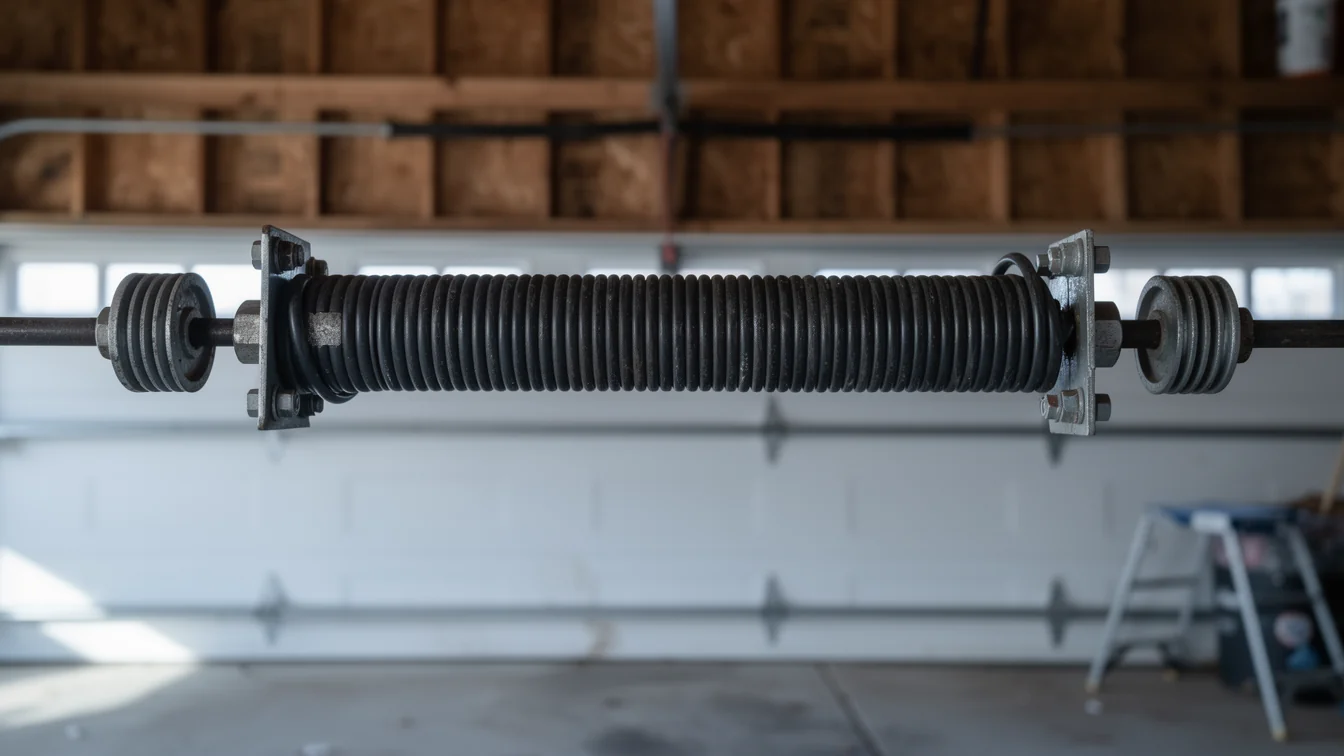
A torsion spring holds tremendous stored energy, and that energy is what lifts your door. As the steel ages, it loses some of its elasticity - it still looks fine, it still functions, but the margin between
Checking It Yourself
You can look at a spring without touching it. With the door closed, find the spring above the door opening and check for a visible gap in one of the coils - that's a spring that's already separated and is only still in place because the door happens to be down. Don't open the door if you see that.
Listen for a loud bang from the garage, even if the door still seems to work afterward - a spring can fail and the opener will sometimes still drag the door up on the other spring alone for a little while, which masks the problem until the second spring goes too.
Feel is a bad test here - a door that suddenly feels heavier to lift by hand, or an opener that strains and reverses partway up, both point to lost spring tension, and they're worth a call. What we won't tell you to do is adjust or remove a torsion spring yourself. The tension in that coil can cause a serious injury, and it's not a job where a quick online video makes up for not knowing the exact wind and bar size on your specific spring. If yours looks original to a house from this stretch of the 1970s or 80s, the honest answer is usually that it's closer to the end of its life than the beginning, cold front or not.
Talk to a local pro
Garage door trouble in Stuart?
Same-day service with honest, upfront quotes.