Season by Season
Stuart sits in a mild temperate band, so we don't get the freeze-thaw cracking that tears up springs and tracks up north. That doesn't mean the door coasts through the year unbothered. The humidity here is high most months, and salt-laden air drifting off the river corridor works steadily on anything metal - hinges, rollers, the galvanized coating on torsion springs. In the wetter stretch of the year we see more swollen wood jambs on the older homes and more corrosion on hardware that's been outside its warranty window for decades. In the drier months, lubrication dries out faster than owners expect, and that's when rollers start chattering. There's no ice storm call here, no snow load on the header. What replaces it is a slower, year-round grind: moisture, salt, and heat cycling the steel. A service call in March looks for different wear than one in August, but the underlying cause is the same climate working on the same aging parts all year, not a single season doing the damage.
What Local Conditions Do
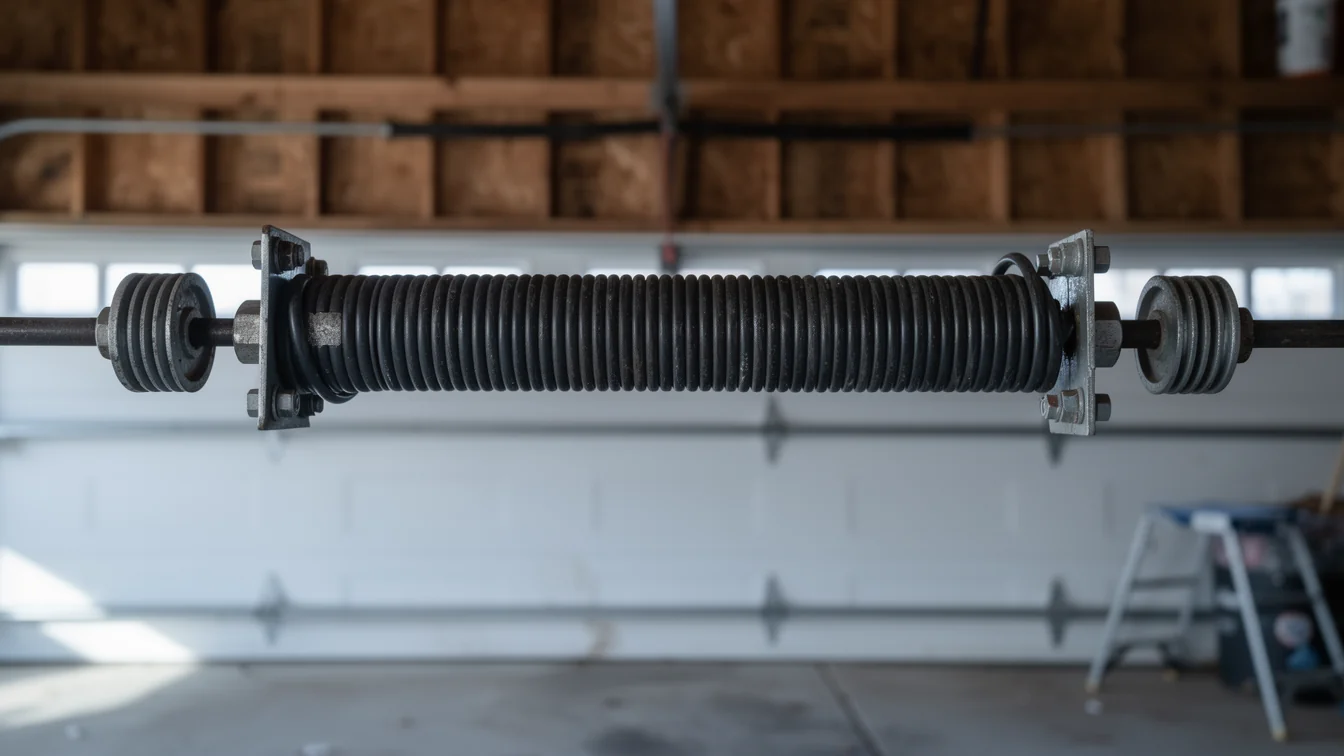
The combination of mild temperatures and coastal humidity means parts don't fail suddenly here the way they do in harsher climates - they fail slowly, from corrosion and lubricant breakdown rather than cold-snapped steel. We spend a good part of any call checking for surface rust on spring coils and cable ends, because that's where salt air shows up first. Bottom seals crack from UV and heat rather than cold. Openers running in humid garages tend to show electrical issues at the limit switches before they show mechanical ones. None of this is dramatic, which is part of the problem - owners don't notice a slow corrosion job until a cable snaps or a spring loses enough tension that the door won't hold itself open. A service call in this climate is as much about catching that slow decline as it is about fixing something broken outright.
What Is Going On
Housing across this service area - North River Shores, Sewall's Point, Jensen Beach, Port Salerno, and the inland pockets out toward Indiantown - was built mostly between 1969 and 1988, with the median landing around 1983. A lot of that means original torsion hardware that's now pushing forty years old, installed to a code and a parts standard that's since changed twice over. On a service call, that's the first thing we're looking at: is this a spring, cable, or opener that's original to a house from that era, or has it already been replaced once. With 19,430 owner-occupied houses spread across roughly 33,518 households in the area, most of what comes through isn't storm damage or a one-off accident - it's that original-build hardware finally giving out. We check spring wind and cable fray first because that's where age shows up fastest on a door this old, then move to the opener and track alignment.
Checking It Yourself
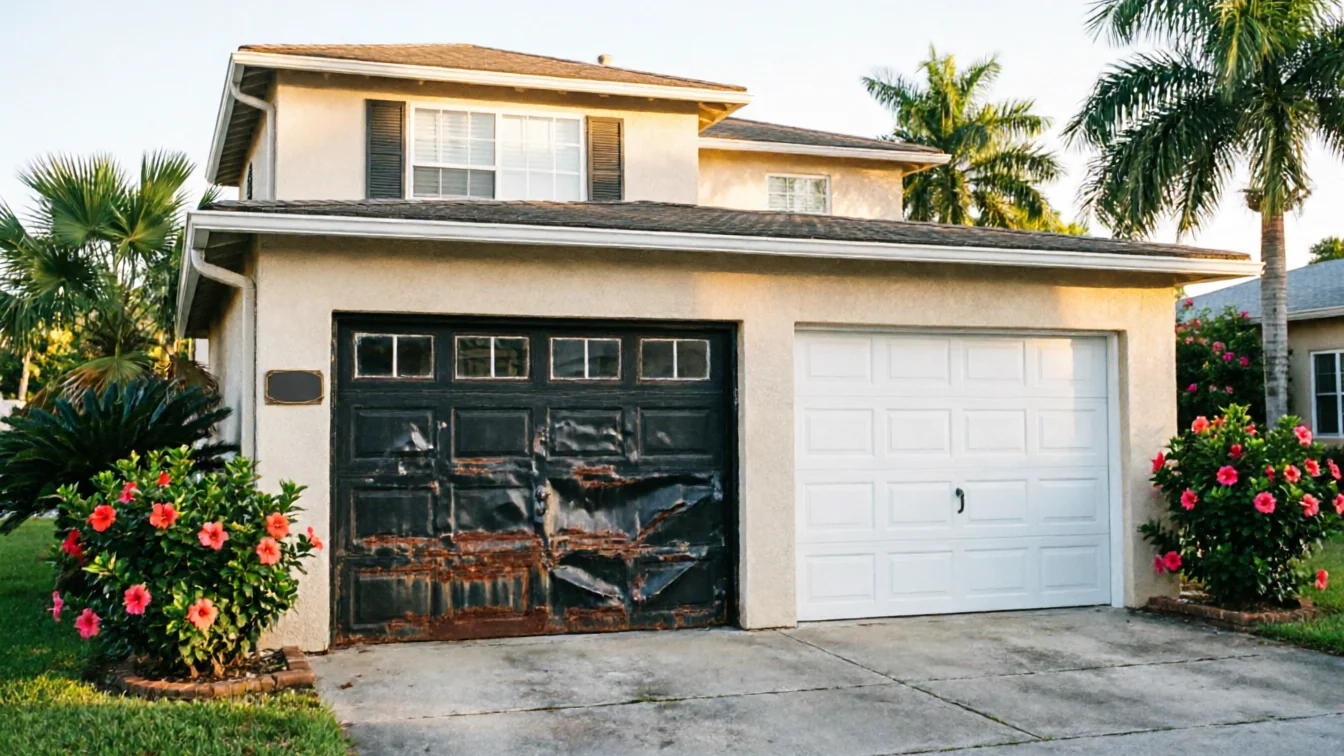
Before you call, there are a few things worth looking at, especially if your house falls in that 1969-1988 build window. Pull the manual release and lift the door by hand - if it feels heavy or won't stay open on its own, the spring has lost tension and that's not a DIY fix; springs under load are the one thing we tell owners flatly not to touch. Look at the cables for fraying or rust, common after years of coastal humidity. Check the bottom seal for cracking from sun exposure. Listen for grinding on the rollers, especially if the house has had the original hardware since it was built. What we can't always do quickly is guess a part's exact age without seeing the stamp on the spring or opener, and some older parts aren't stocked on the truck and need ordering - that's the one honest limit on a same-day call. If the door is original to a house built in the early '80s, plan on us finding more than one worn part.
Talk to a local pro
Garage door trouble in Stuart?
Same-day service with honest, upfront quotes.