Season by Season
Stuart doesn't get the hard freeze-thaw cycle that kills springs and hinges up north, and that's the main reason a door built in the 1970s or 80s is often still worth saving here. Our climate band is mild temperate - no deep cold snaps that shrink metal and crack old grease, no sustained dry heat that warps wood panels the way you'd see in a desert town. What we do get is humidity that sits in the air most of the year and salt-laced moisture blowing in off the water, especially for houses near North River Shores or Sewall's Point. That combination doesn't shock a door apart the way a hard winter does. It works slower - rust creeping into roller brackets, track bolts loosening as humidity swells and shrinks the wood jamb around them. A door that's 35-40 years old and still tracks straight has usually been protected from direct salt air or kept in a garage that stays dry. One that's pitted at every hinge point has been fighting the coastal air the whole time, and that's a different repair conversation.
What Local Conditions Do
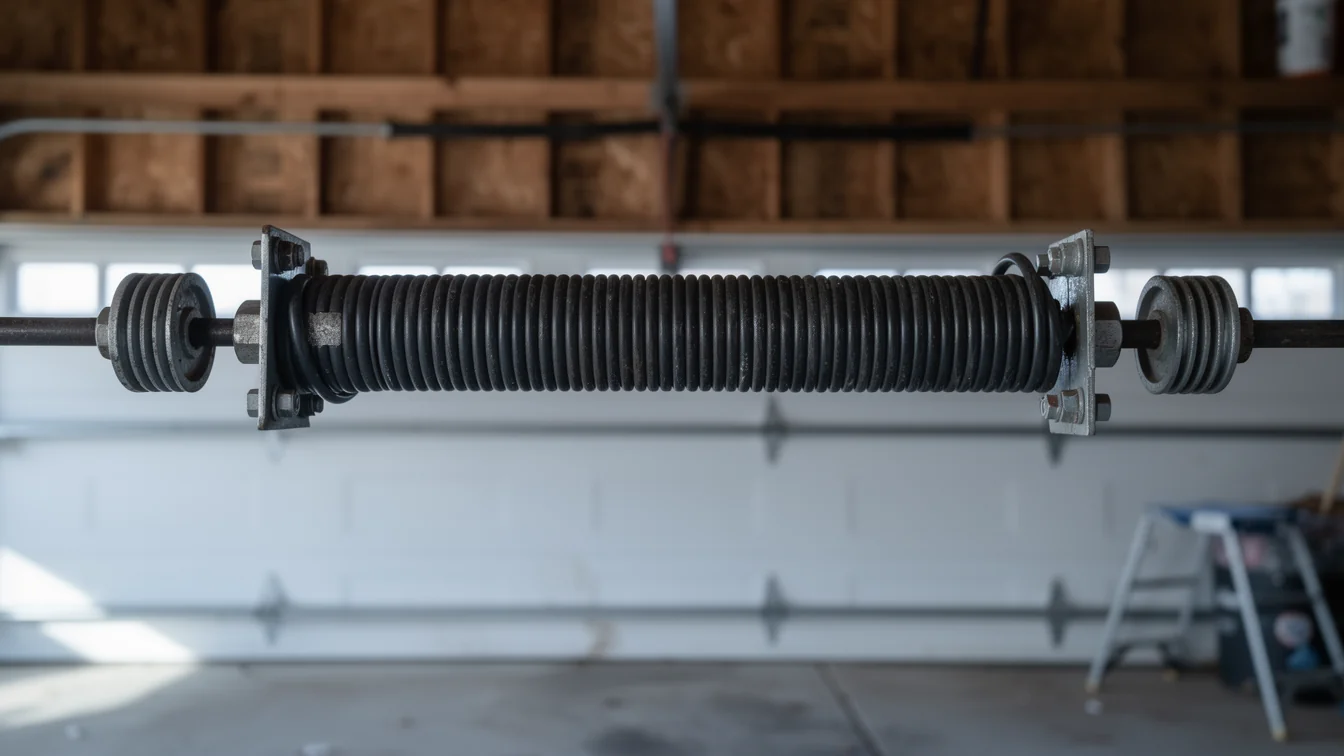
With most housing stock in this area dating to 1969-1988, and a lot of the stock across our twelve service areas sitting in that 1980s-90s range, we're mostly working on doors and openers that are original or one replacement cycle in. The mild temperate climate means the springs and cables on these doors aren't dying from freeze damage - they're dying from age, cycle count, and moisture creeping into the coil wind. Houses from that era commonly used lighter-gauge torsion springs and simpler extension setups than what's installed today, and parts for the oldest of those setups aren't something every supplier carries. That's the honest limitation: if your door is original to a house built in the early-to-mid 1970s, we can often source a compatible spring or hinge, but matching an exact original panel or discontinued track bracket sometimes isn't realistic, and replacement makes more sense than a patch repair.
What Is Going On
When a door from the 1969-1988 window starts acting up, it's rarely one thing - it's accumulated wear meeting humidity. A spring that's cycled for forty years of mild-climate weather doesn't snap suddenly the way a frozen one does; it fatigues, and you'll usually hear it groan or see the door sag unevenly before it goes. Rollers in houses built in that span were often steel, not the sealed nylon rollers common today, and steel rollers in our coastal air pit and bind rather than simply wearing smooth. Track misalignment is common too - over four decades the wood framing around the opening shifts slightly, especially in homes closer to the water like Port Salerno or Jensen Beach, and that throws the track out of true even if the door itself is sound. None of this means replace automatically. A door with a solid frame and panels but a dying spring or worn rollers is a repair, not a teardown.
Checking It Yourself
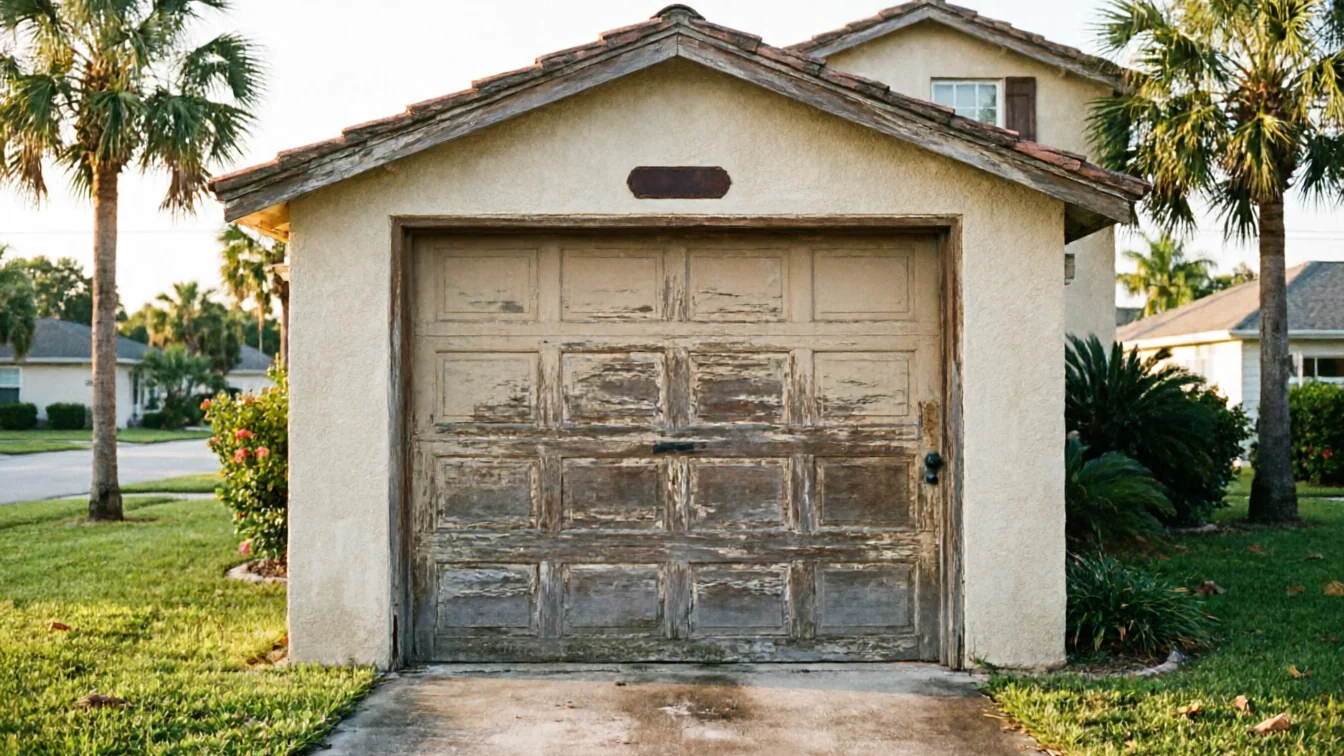
Before you call anyone, open the door halfway by hand with the opener disconnected. It should hold that position on its own - if it drops, the springs are losing tension, which is expected on a door that's been cycling since the 1970s or 80s and is a straightforward repair, not a sign to replace the whole unit. Look at the rollers: surface rust is normal out here, but if a roller is pitted enough that it's rough to the touch or the bracket behind it is bent, that's wear from years of our coastal humidity, not a quick fix. Check the bottom panel for soft spots or bubbling paint - that tells you moisture has been getting behind the metal or into the wood for a while. If the door is original to a home built decades ago, in that 1969-1988 range common across our area, and the frame and panels are still straight, it's almost always worth repairing rather than replacing.
Talk to a local pro
Garage door trouble in Stuart?
Same-day service with honest, upfront quotes.