Mid-1980s home age
Call to get a job on the schedule, and have the house's build era handy if you know it; for Indiantown that's almost always going to be mid-1980s, which tells us a lot about what we'll likely find before we even pull up.
Indiantown, Stuart
Indiantown's garage doors date to the mid-1980s building boom. See what breaks first on these doors and how Stuart Garage Door Pros handles the 18-mile call.
Local causes
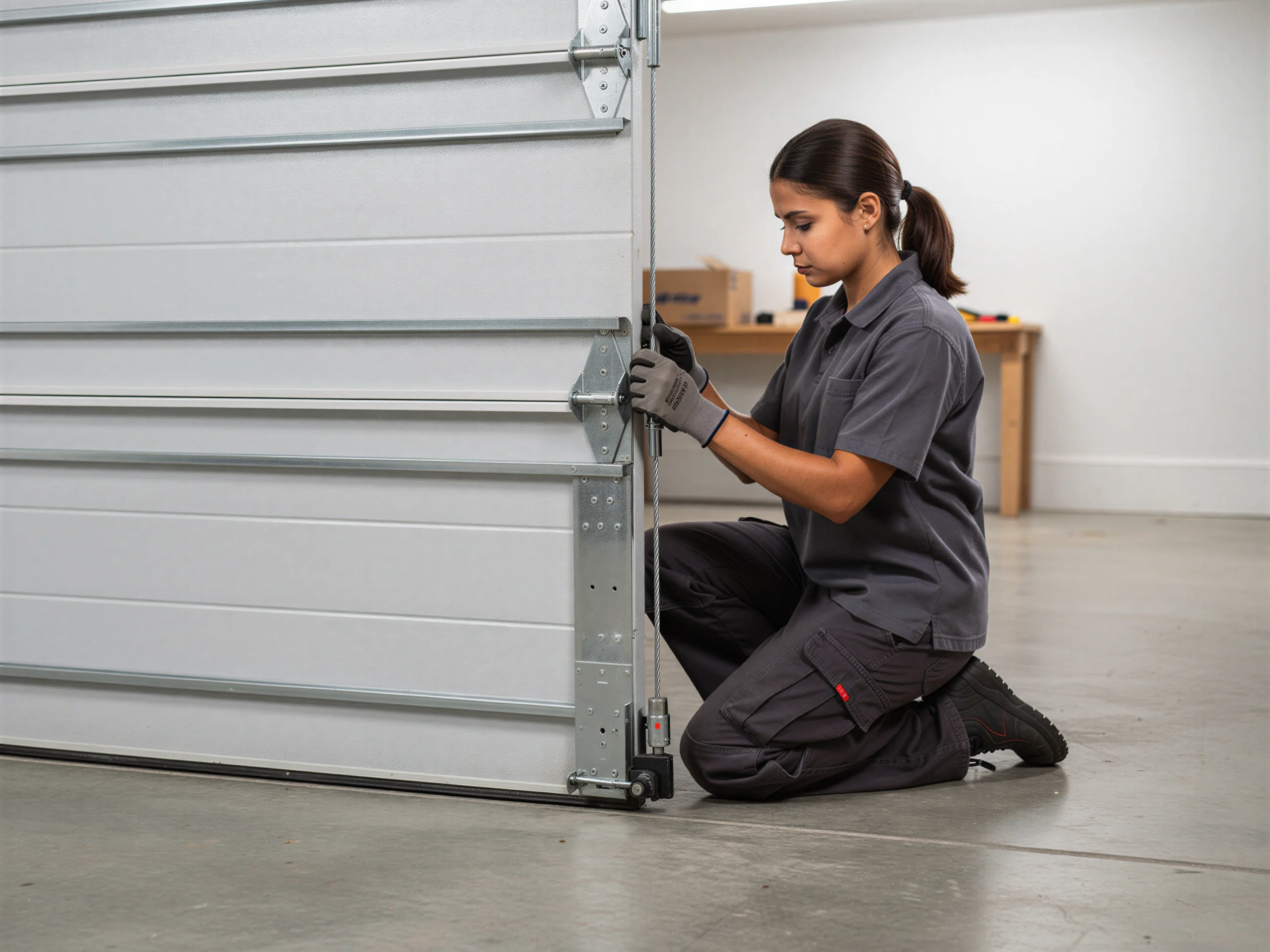
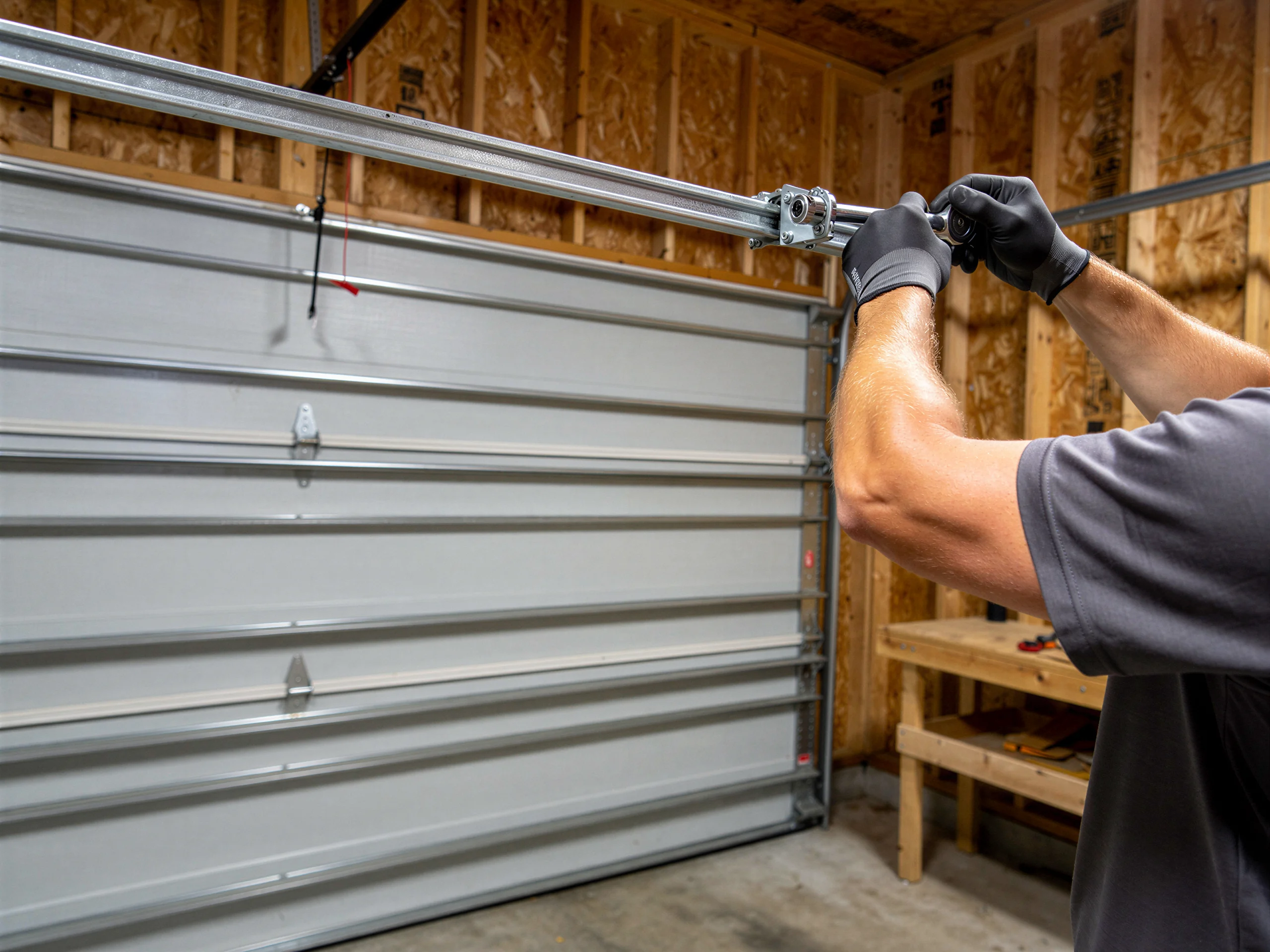
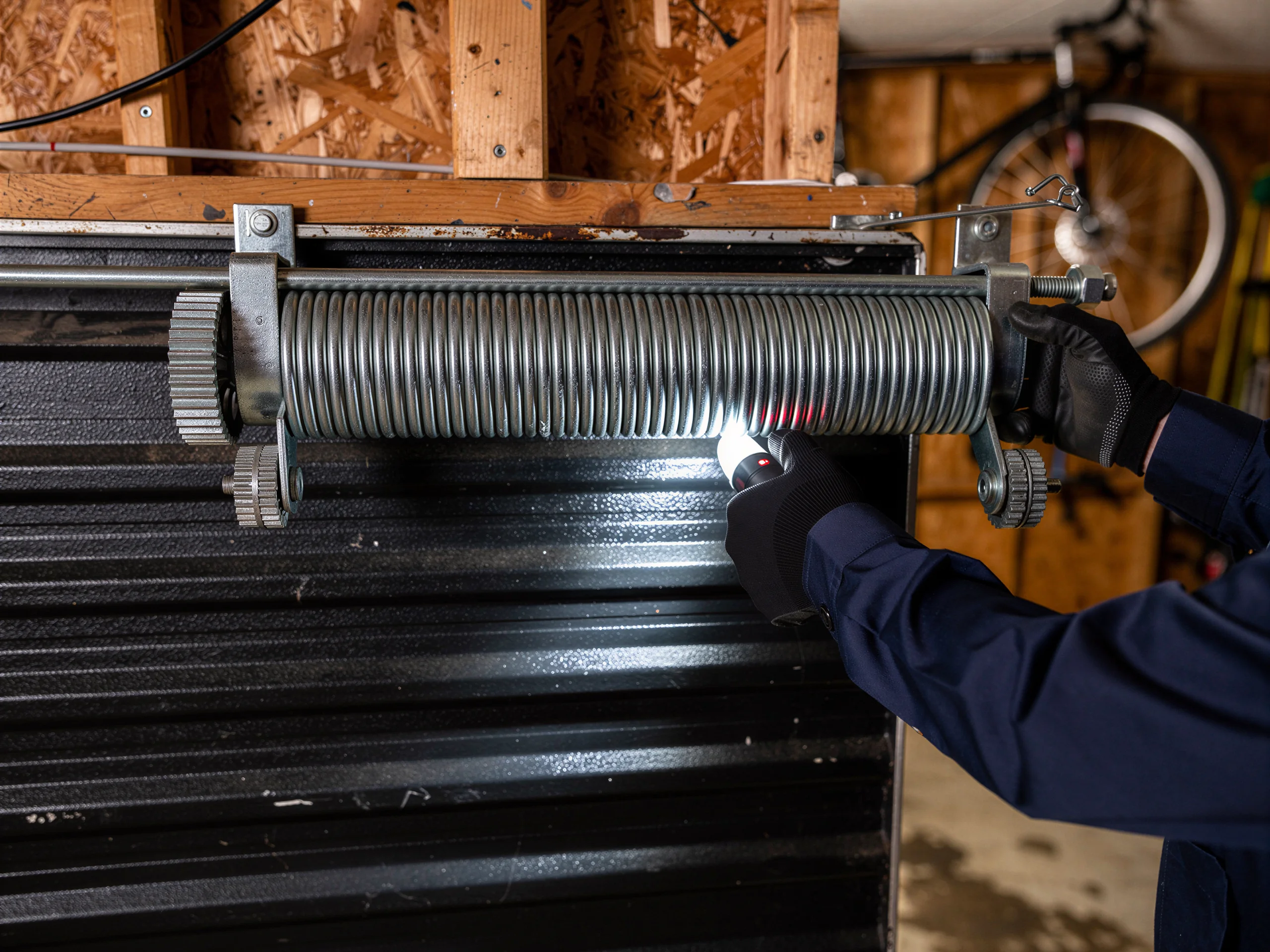
The fault we see most in Indiantown isn't the opener. It's the spring setup underneath it. Indiantown's housing stock centers on a median build year of 1985, which puts most garages here squarely in the era when builders were still running extension springs over the horizontal tracks instead of torsion springs over the header. Extension springs stretch, and when the safety cable through the spring is missing or frayed, a snapped spring can send the coil flying instead of just dropping the door. We find this setup constantly on these mid-80s houses, and it's the first thing worth checking before anything else.
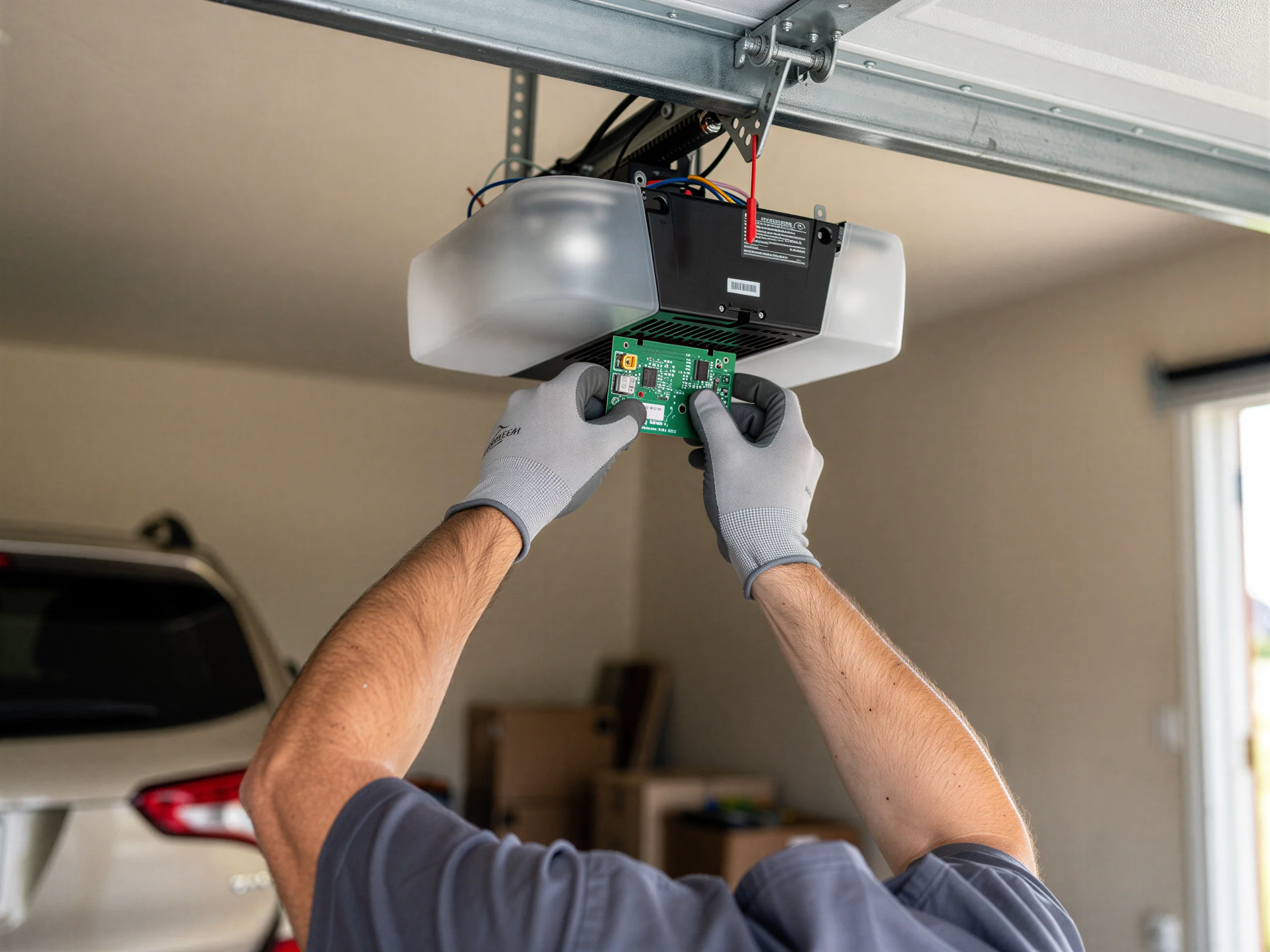
The second piece tied to that same build year is the opener. A house built in 1985 has likely gone through two or three openers since, but the original header bracket and rail mounting points are often the same ones from the first install. Reusing 40-year-old mounting hardware on a new opener is a shortcut that works until it doesn't - usually as a bracket pulling loose from a header that's taken on moisture over the decades.
Watch-outs
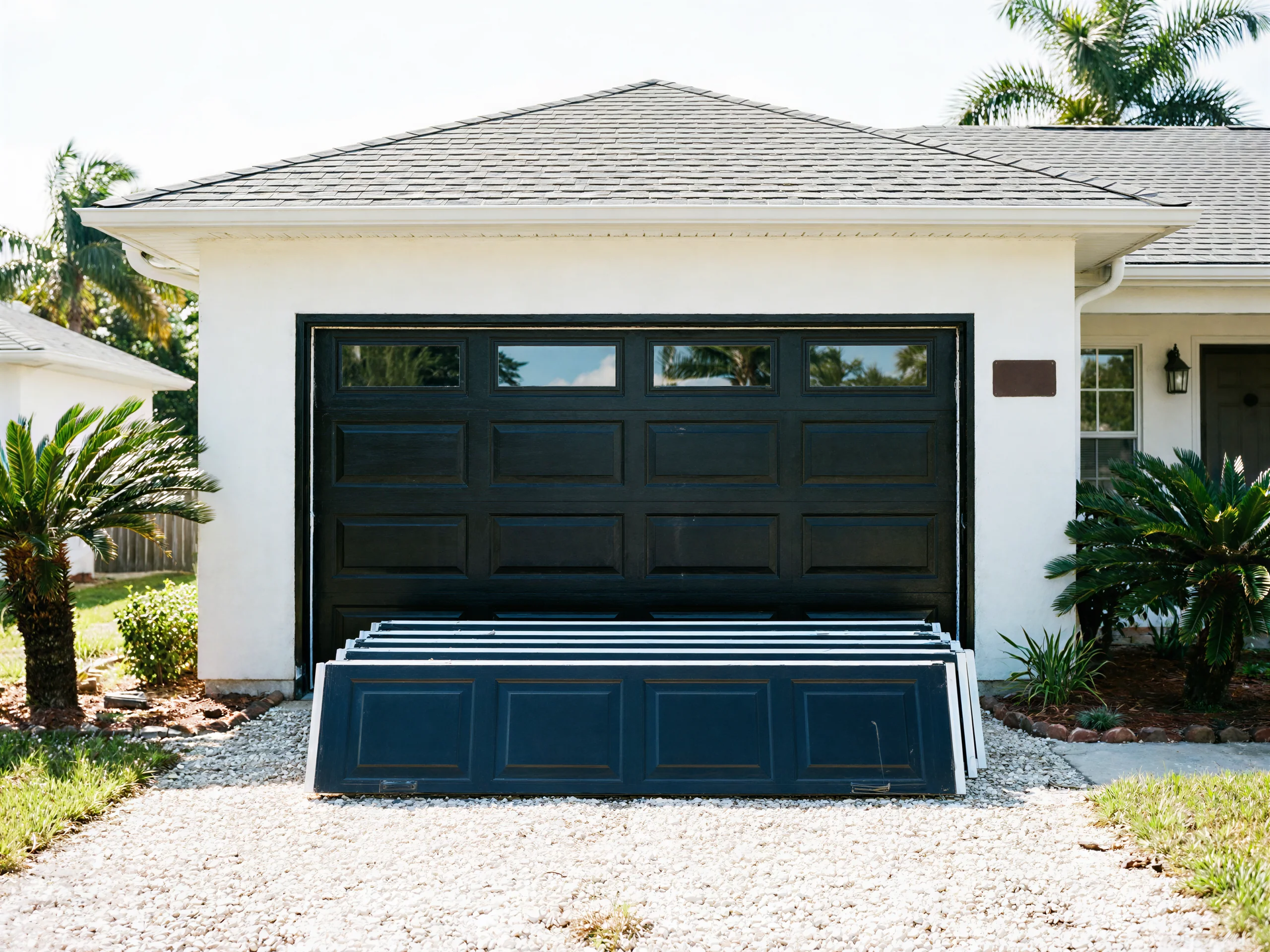
Doors from the 1985 era were often sized to openings that newer manufacturers don't stock in standard widths anymore. If a panel on a 1980s steel door cracks or dents, matching it exactly can mean a special order rather than a same-day swap - that's a real lead-time issue, not a convenience problem we can solve by showing up faster.
The other place this goes sideways is wiring. Openers from the 80s and 90s predate rolling-code safety sensors as a factory standard, and retrofit photo-eye sensors on older track systems sometimes get mounted at the wrong height or on brackets that were never meant to hold them. When a door reverses randomly or won't close at all, a misaligned retrofit sensor on an older track is often the real cause, not the opener itself.
We'll say plainly: if a door this old needs more than a spring and sensor fix, replacement is usually the better call than chasing parts for a 40-year-old track system. We won't talk you into patching something that's cheaper to replace.
Booking
Stuart Garage Door Pros covers Indiantown from Stuart, about 18 miles out. There's no branch office or depot in Indiantown itself - every job here is a scheduled trip from Stuart, so booking ahead matters more than it would for a town closer to our shop.
Call to get a job on the schedule, and have the house's build era handy if you know it; for Indiantown that's almost always going to be mid-1980s, which tells us a lot about what we'll likely find before we even pull up.
You can see the full rundown of what we cover in Indiantown at our Indiantown service page, or check the broader list of services we run out of Stuart at our main service page.
Pricing
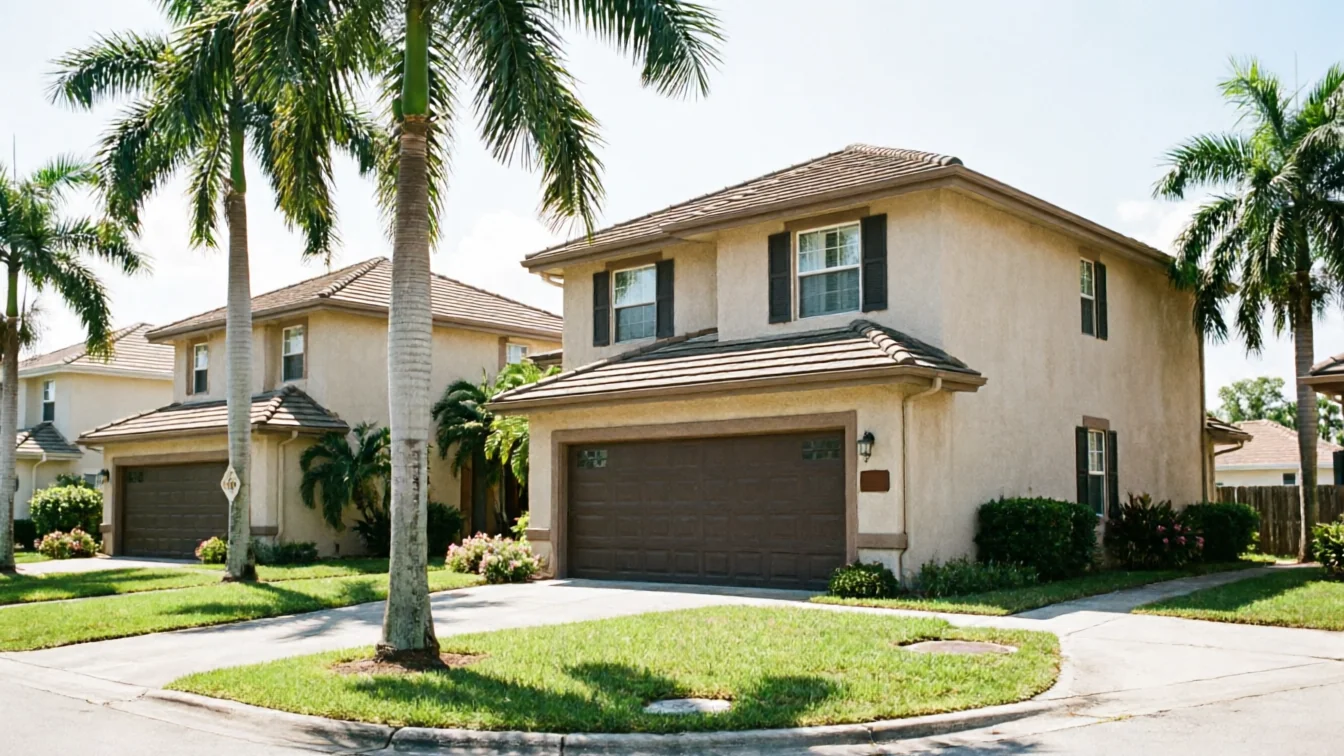
Indiantown's median household income sits at $52,372, noticeably below the $63,724 median across the wider service area. That gap shows up in the repair-versus-replace conversations we have here more than in towns closer to Stuart - homeowners are more likely to ask us to patch an extension spring system one more time rather than convert it to torsion, and that's a reasonable call on a door that's otherwise sound.
We don't have a posted price list to quote here, and we won't invent one - every job gets priced after we see the door, the spring type, and what the opener mounting looks like. What we can tell you is that a straight spring replacement on an older extension system is a different job, and a different cost, than converting that same door to torsion hardware. We'll lay out both options before doing either.
Warning signs
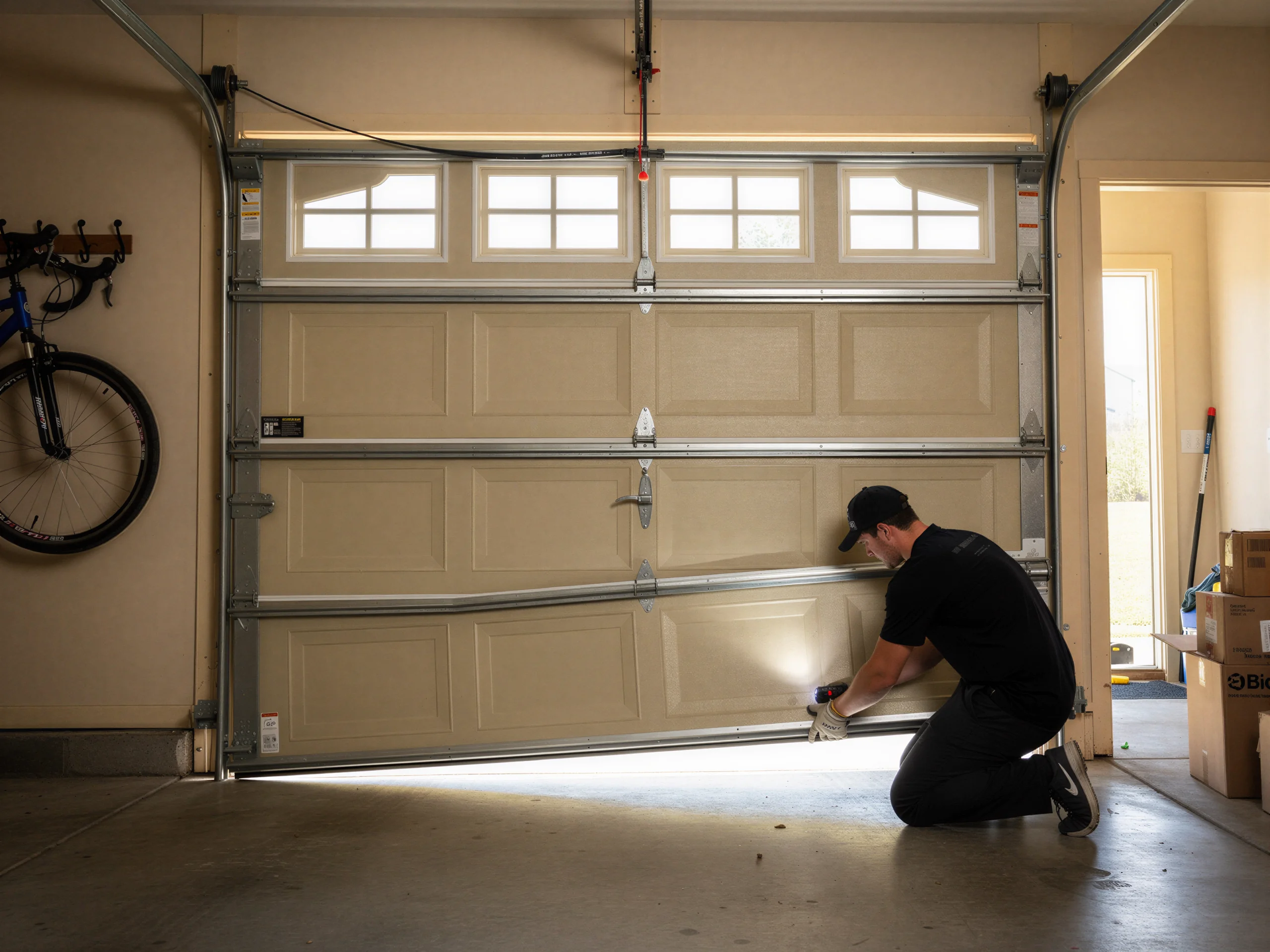
On a 1,742-household town built mostly in the mid-80s, the pattern repeats: a door that used to lift smoothly now jerks partway up, or drops the last foot instead of lowering evenly. That's usually one of the two original extension springs giving out while the other still holds some tension - a lopsided failure, not a total one.
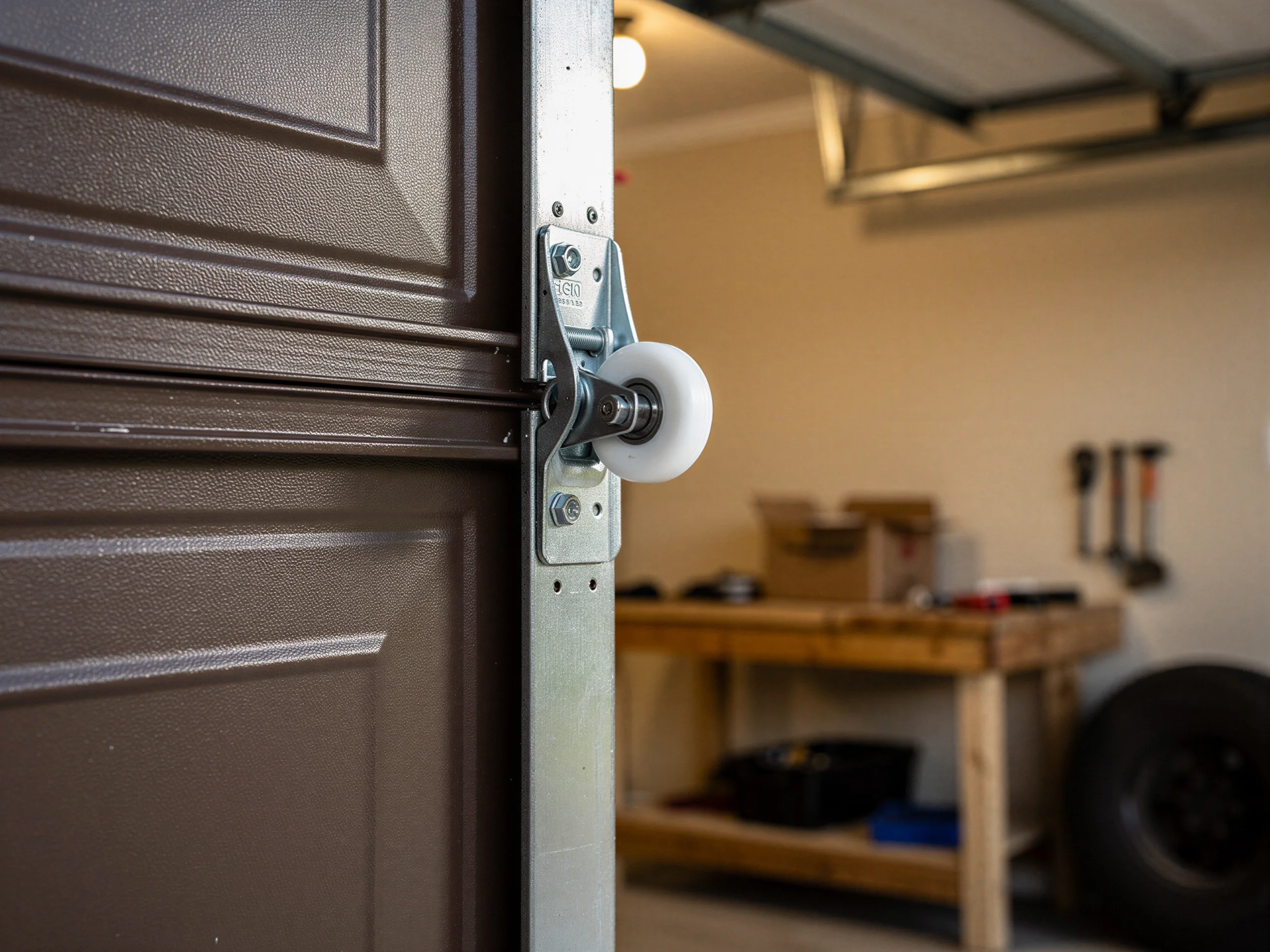
Another common sign is an opener that runs louder than it used to and takes longer to fully close, often because the rail or trolley hardware is original to a house built decades before the current opener was installed. And if the door reverses for no clear reason, check whether the photo-eye sensors were added later and sit at mismatched heights - a retrofit issue specific to houses that didn't come with sensors from the factory, which describes most of Indiantown's housing stock.
Questions
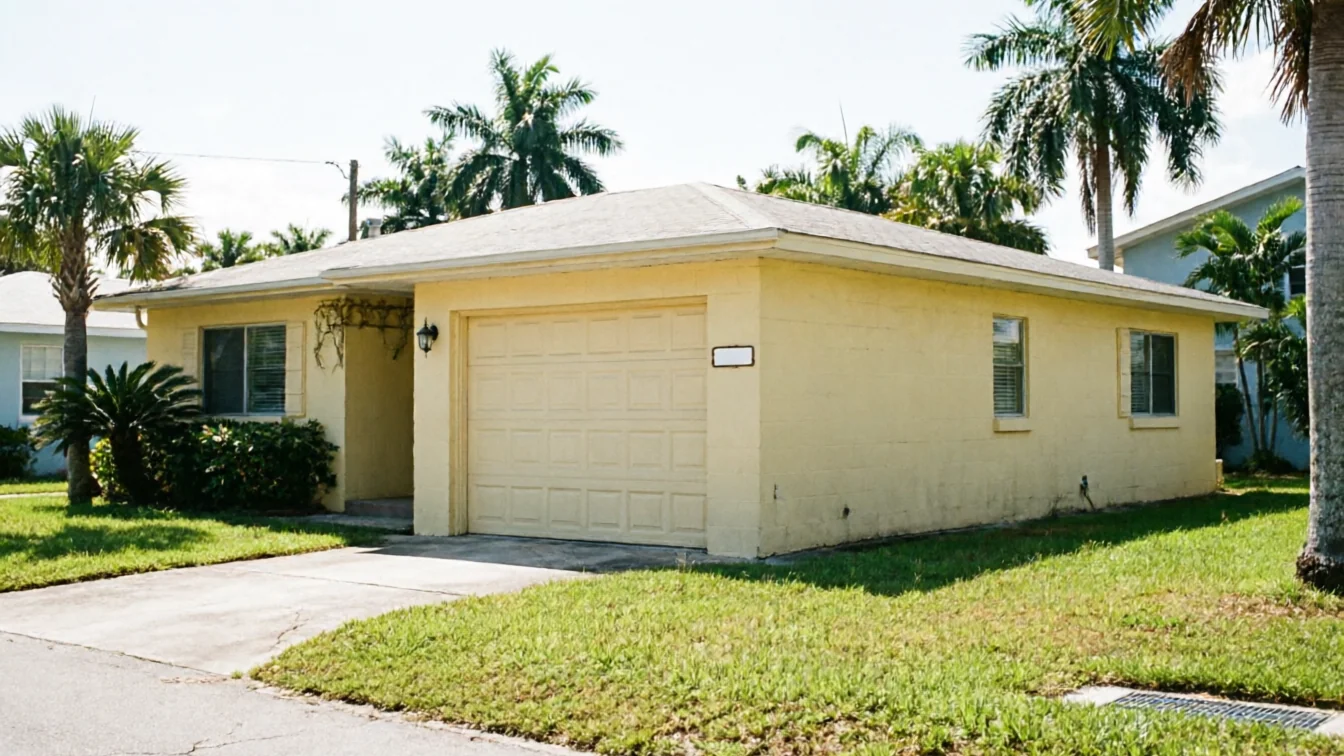
Houses in Indiantown mostly date to the mid-1980s, when extension springs over the horizontal tracks were standard. Those springs wear unevenly, so one gives out before the other and the door tilts as it closes. It's a spring problem, not a track or panel problem, and it's worth fixing before the uneven pull stresses the opener.
No. We run out of Stuart, about 18 miles away, and travel to Indiantown for scheduled jobs. There's no local depot, so booking ahead helps us plan the trip rather than treating every call as a same-day dispatch.
Depends on what's failing. A spring or sensor issue on an otherwise sound door is usually worth repairing. If the track, panels, and opener mounting are all original to a mid-1980s install and failing together, replacement often costs less over time than chasing parts for obsolete hardware.
Explore more
Ready when you are
Stuart Garage Door Pros repairs and installs garage doors, springs and openers in Stuart, FL and the surrounding area.